Posts

Level I Fieldwork C - Debriefing Video

Image
OT 640 Level I Fieldwork C  Debriefing Session - Macy Porter  Link:  https://youtu.be/1oCcHqAb4_I

12-Step Reflection

I attended an AA meeting that had five group members.  Since there were so few members, we had the opportunity to directly interact with the members before the meeting began. Immediately, we were greeted with hugs, introductions, and questions about our situation. We disclosed to them that we were students and asked permission to be there. Since this was such a small group, I made sure to reiterate that if our presence was unsettling to anyone, we would leave.  F or this 12-step meeting, each member alternates weeks in which they are the leader. On this particular day, the assigned leader did not show up, so another group member took on the advisory role. His main task was to choose the topic then started the conversation. What I found to be interesting about this leader was that he made sure we knew everything that was going on. He would stop and explain to us why he was doing something a particular way before moving on. I think this helped the other members...

Post Group Facilitation Reflection

The most difficult part about leading a group by myself, rather than with a co-facilitator, is remembering to follow all of the points outlined on my group protocol. Almost immediately after I concluded the group, I realized I missed a few crucial points. During the introduction, I thoroughly explained the purpose, expectations, and time frame. Unfortunately, I was so excited to jump into the yoga that I missed a crucial aspect: the ice breaker. During the activity, I wish I would have spent time demonstrating the correct posture, alignment and how to properly hold each pose. I had expected the sun salutation to take more time than it did, so I decided against going through this. I also think the group members could have performed the sequence a few more times, but all the evidence I read said that the sun salutation should be performed two to five times for beginners. I think the activity could have been more beneficial if we would have had the opportunity to flow through it more an...

Yoga for Occupational Balance

Image
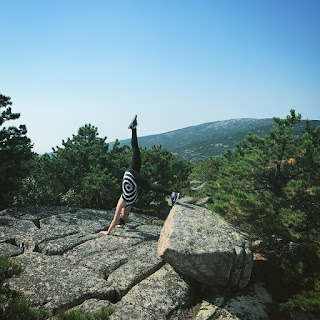
I am about to introduce to you to a few of my greatest passions. Yoga, occupational therapy, and taking pictures of myself.  Before you begin reading, it is important to understand these pictures were taken for my own enjoyment and nothing more ( fine  and for instagram likes). My alignment and posture is not always perfect. Please acknowledge that many times I was mid-movement as these pictures were taken. The purpose of the pictures is reference.  I am not a yoga teacher nor do I claim to be.  I am a yogi and I still have a lot of work to do in my own practice, but I have come a long way from where I started. If your goal is to learn all about correct postures and proper alignment, please refer to the reference list at the bottom of the page. The names of the poses are not the formal names nor universal names. Remember, the purpose of this practice is therapeutic healing, whether that be mental or physical. We aim for correct alignment in order to pr...

Meditation and the Group Process

Group Meditation  Journal: A "Collective Effort to Make Yourself Feel Better": The Group Process in Mindfulness-Based Interventions  Mindfulness based interventions (MBI) can be used to support people managing chronic pain, emotional distress, self management, and support people in care-giving roles. Multiple studies have found the group process positively impacts the experience of learning mindfulness, primarily during the initial weeks. This positive experience is facilitated through supporting learning, reducing stigma, and decreasing isolation. MBI in groups also creates a sense of accountability and a culture that values a sense of belong to the group, cohesion, and friendship.  During this study, the participants expressed feeling less alone by developing a sense of belonging and connection with the group, which fostered the understanding of suffering as universal. They further found it supportive and motivating when group members shared each other's su...

Collaborating

Merriam-Webster’s definition of collaborate is to work jointly with others or together, especially in an intellectual endeavor. Thesaurus.com lists synonyms of collaborate as cooperate, participate, coproduce, join together , team up , and work with. The word “collaboration” produced 2,551 search results on AOTA’s website. The word “collaborate” produces 359 research articles on AJOT’s website. Collaboration is when two people work together to achieve a goal. Occupational therapists have to opportunity to collaborate with clients in a way that produces change and motivation. One of the core concepts of occupational therapy is the client-centered approach, in which the client and their family are active participants throughout the therapeutic process. In other words the OT, the client, and the family must collaborate. In order to be a successful occupational therapist, we must learn how to collaborate with our clients, their families, and members of the interdisci...

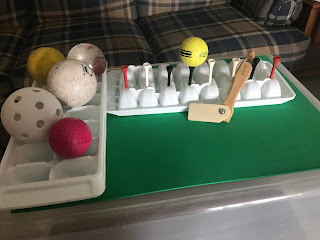
ICEhould Be Golfing

Image
ICEhould Be Golfing  The easy to make therapeutic game to help strengthen upper body muscles and increase balance. Great for people who are paraplegic and golf lovers!  https://www.youtube.com/watch?v=Ylc3q5nx8zY

Until I Say Good-Bye

Neuronote #5 Until I Say Good-Bye by Susan Spencer-Wendel  I read  Until I Say Good-Bye , which is a memoir written by a highly awarded journalist during her battle with ALS. As I have said many times before, the best way to learn about a disease or injury is to step into that person's shoes. There is no way to truly understand what a disease like ALS is like unless you have experienced it for yourself or seen a love one suffer through it. Susan wrote this book in such an elegant way, it is hard not to develop a new found perspective from it. While reading this book, I was able to take so many different perspectives from it. I could see it from the point of view of an OT, a daughter, a friend, and a person with the disease. Susan also wrote this memoir in way that I could honestly step in her shoes and feel the emotions she was feeling. Not only did I learn so must about the disease itself, but I learned more about the perspective of someone who is terminally ill....

Universal Cuff in Action

Image
Using a Universal Cuff For Everyday Activities  When I first learned about a universal cuff, I thought that it was an amazing idea and adaptive tool. A universal cuff seems rather easy in theory, but I soon realized that nothing is as easy as it sounds. When I first tried to use it, I thought that it was not to bad. After about ten seconds of using it, it became a lot more difficult than I assumed it would be. The fork or pencil would slip out of the cuff, I would have to turn my whole arm certain ways to do particular actions, and I had to adapt every aspect of the activity besides just to grip aspect of it. I used a universal cuff to eat dinner, write my name, and type for one minute. I choose to do this experiment so I could understand on a first hand basis what it is like to have to use an adaptive tool to do simple tasks like eat. I am glad I did it, because it was definitely not as easy I expected it would be. As an occupational therapy student, I feel as though physical...